By Our Reporter.
Just months after securing the ruling All Progressives Congress (APC) governorship ticket for Plateau State ahead of Nigeria’s 2027 elections, Governor Caleb Manasseh Mutfwang now finds himself at the centre of an escalating political confrontation that insiders warn could fracture the party and reshape the state’s political future.
What began as quiet disagreements within influential APC circles has rapidly evolved into public protests, accusations of manipulation, and claims of an organized effort to undermine the party’s own governorship candidate.
For many Plateau residents, however, the growing crisis is about far more than political rivalries.
It raises a familiar and painful question: *Will another election season be consumed by elite power struggles while ordinary citizens continue to wait for the dividends of democracy?
The latest signs of trouble emerged following protests in Angwan Rukuba over the outcome of the APC Jos North North primary election. Protesters alleged that the rightful winner was denied victory, claiming that a candidate who placed fourth was instead declared the party’s nominee.
Days later, concerned party stakeholders gathered at the Nigeria Union of Journalists (NUJ) Press Centre in Jos, calling for transparency and warning that unresolved grievances could deepen divisions within the ruling party.
Behind the public demonstrations lies what many party insiders describe as a widening rift between supporters of Governor Mutfwang and an influential bloc known within Plateau politics as the “Legacy Group.”
Several stakeholders, speaking on condition of anonymity because of the sensitivity of the matter, alleged that elements within the party are actively working to weaken Mutfwang’s political base despite his emergence as the APC governorship candidate.
While these allegations have not been independently verified, the perception of internal sabotage has spread rapidly across Plateau’s political landscape, fueling mistrust among party faithful and intensifying speculation about the APC’s readiness for the 2027 elections.
Political analysts warn that such divisions rarely remain confined to party headquarters.
“When internal conflicts become public, governance suffers,” said one political observer in Jos. “Attention shifts from delivering services to managing political survival.”
For many residents, that concern is deeply personal.
Plateau continues to grapple with insecurity, unemployment, rising food prices, and the long term effects of communal conflicts that have displaced thousands over the years. Communities struggling to rebuild their lives fear that prolonged political infighting could distract leaders from addressing these urgent challenges.
A youth leader in Jos described the situation bluntly.
“People are less concerned about which political faction wins,” he said. “They want leaders who will focus on security, jobs, agriculture, education, and economic recovery.”
Some APC stakeholders have gone further, characterizing the unfolding events as an “internal political coup” aimed at frustrating Governor Mutfwang’s path to reelection. Others argue that continued divisions could trigger defections, weaken grassroots mobilization, and create opportunities for rival political parties to capitalize on the crisis.
Whether those fears materialize remains uncertain.
What is increasingly clear, however, is that Plateau is entering a politically volatile period where personal ambitions, historical rivalries, and competing centres of influence threaten to overshadow governance.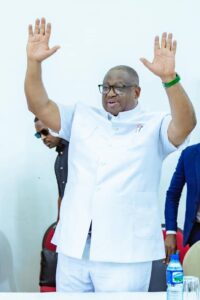
Political history across Nigeria demonstrates that elections are often won or lost long before voters cast their ballots. Internal divisions, unresolved grievances, and competing loyalties have repeatedly proved more damaging than opposition attacks.
For Plateau’s citizens, the consequences extend far beyond party politics.
Every day spent navigating internal power struggles is another day that pressing issues, economic hardship, youth unemployment, healthcare, infrastructure, and security, risk being pushed further down the government’s agenda.
As the countdown to Nigeria’s 2027 general elections gathers pace, many Plateau residents are hoping their leaders choose reconciliation over confrontation.
Because in the end, political victories belong to parties.
But the cost of political conflict is almost always borne by ordinary people.
