
Child abuse in Plateau State has reached an alarming level, with cases ranging from domestic violence and neglect to substance abuse, child labour, exploitation and sexual abuse.
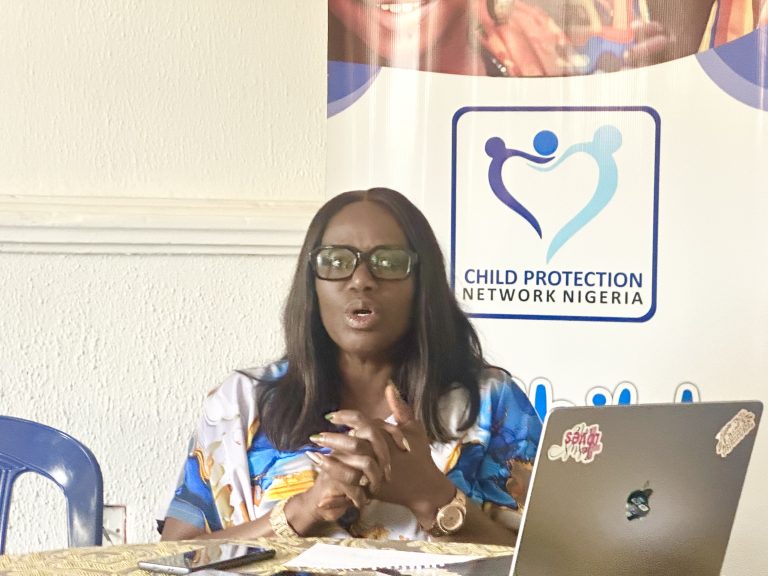
Speaking during an interview, Sandra Chikan, Plateau State Coordinator of the Child Protection Network (CPN), rated the level of child abuse in the state at 9 out of 10, revealing that the network receives an average of at least three cases every week through its helplines alone.
According to her, the figures do not represent the full picture, as several other organisations across the state also receive and respond to child protection cases.
“On a scale of 1 to 10, I am honestly going to say 9. We’re at 9,” Chikan said.
She explained that while conflict remains one of the drivers of child abuse and vulnerability in Plateau State, the problem extends far beyond conflict-affected communities and displacement camps.
Child abuse goes beyond conflict
Chikan highlighted several forms of abuse and exploitation occurring within communities across Plateau State.
She said young children are increasingly being exposed to artisanal mining, with reports involving children as young as three and four years old visiting mining sites.
She also raised concerns about children being exposed to substance abuse, noting that some children as young as seven and eight have reportedly been found staying out as late as 1 a.m. or 3 a.m.
According to her, some children are also being used to carry or sell drugs, while others are vulnerable to trafficking after being pushed into informal jobs or activities by peers.
Domestic violence and abuse within homes are another major concern.
Chikan recalled a recent case involving a girl whose guardian allegedly broke her hand, despite the person already having been reported previously.
She also mentioned cases involving children brought into homes as domestic helps who subsequently experience violence and exploitation.
Other cases reported to the network include a boy sleeping in a tricycle, allegedly being beaten regularly and denied food, as well as underage girls working long hours in restaurants without adequate food or care.
“Neglect is high,” she said, stressing that some parents leave their children without adequate supervision, leaving them vulnerable to different forms of exploitation and abuse.
She also warned about sexual predators targeting girls within communities.
What is the Child Protection Network?
The Child Protection Network is not an enforcement agency. Rather, it is a coalition of state and non-state actors working together on the prevention and response to child exploitation, violence and abuse.
Its members include government agencies such as the Ministries of Justice and Women Affairs, as well as non-governmental organisations working in child protection.
The network was established to strengthen the referral pathway so that agencies responsible for different aspects of child protection can work together effectively.
Its work includes raising awareness, rescuing and supporting vulnerable children, providing psychosocial support, making referrals and helping communities understand children’s rights.
Chikan also stressed the importance of distinguishing between discipline and abuse.
She noted that practices such as cutting children or putting pepper on them may sometimes be presented as discipline, but they constitute violations of children’s rights.
According to Chikan, the Child Protection Network handled 36 cases in the last quarter, with 85 per cent of those cases receiving outcomes described by the network as justice for the children.
She explained that justice does not necessarily mean a court conviction in every case.
For some children, justice has meant being reunited with their parents, while others have been removed from unsafe homes and placed in safer environments.
Some received medical treatment, counselling or access to education, while others were placed in safe shelters pending reunification with their families or alternative care arrangements.
The network has also established school-based child protection clubs designed to help children understand their rights, speak up about abuse and know where to seek help when they experience or witness violence, exploitation or domestic abuse.
CPN launches ‘Save the Plateau’ initiative
Funding remains one of the major challenges facing child protection efforts in the state.
Chikan explained that because the Child Protection Network is non-governmental, it relies heavily on funding and support to respond to cases.
Resources are needed for emergency interventions, transportation, medical care, trauma counselling, shelter, family strengthening, case follow-ups, sensitisation programmes and educational materials.
To expand its work, the network recently launched the Save the Plateau Child Initiative, a six-month fundraising campaign targeting ₦200 million.
The goal is to expand child protection interventions across all 17 local government areas of Plateau State.
Among the planned activities are establishing school-based child rights clubs, setting up child protection committees across the local governments, strengthening the capacity of agencies and stakeholders, and producing information, education and communication materials for sensitisation.
Currently, child protection committees have been established in five local government areas with support from SOS, with plans to expand to the remaining local governments.
According to Chikan, these committees are important because they serve as points where child protection concerns can be reported and referred to the appropriate agencies.
The Plateau State Government has already contributed ₦10 million towards the initiative.
Chikan expressed appreciation to the government, particularly through the Plateau State Ministry of Women Affairs and Social Development, describing the contribution as an indication of the government’s commitment to child protection.
She said the network is also appealing to individuals, businesses, organisations and other levels of government to support the campaign.
The network hopes to provide a comprehensive report at the end of the six-month fundraising period.
The Child Protection Network does not currently operate its own permanent safe home.
Chikan said the organisation has only a small emergency space at its office, which can sometimes be used temporarily when an urgent case is received.
For longer-term accommodation, the network works with existing shelters and homes, including organisations that are members or partners of the network.
These include Kingdom Kids Club, Kids with a Vision Foundation, Gidembege, Queen’s, Plateau State Shelter and Simjigo Child Initiative, among others.
The network also works with the Association of Orphanages and Homes Operators and the Ministry of Women Affairs to facilitate shelter arrangements for vulnerable children.
Beyond emergency response, the Child Protection Network is also involved in efforts to strengthen the legal framework protecting children in Plateau State.
Chikan said the network, with support from organisations including ROLAC and SOS, as well as the Plateau State Ministries of Women Affairs and Justice, has been involved in the review of the Plateau State Child Rights Law.
She also highlighted the establishment and inauguration of the Plateau State Child Rights Implementation Committee, as well as the establishment of Local Government Child Rights Implementation Committees.
According to her, the committees bring relevant agencies together to improve coordination and response to child protection concerns.
She added that the Local Government Alternative Care Committee is also part of the framework.
A call for everyone to protect children
The Child Protection Network is calling on individuals, parents, communities, organisations and government institutions to take child protection seriously.
The network emphasises that protecting children is not only about responding when abuse has already occurred. It also involves prevention, awareness, early reporting and creating environments where children can safely speak about what they are experiencing.
With cases occurring both in conflict-affected areas and within everyday communities, Chikan’s message is clear: child protection requires a collective response.
The network is therefore appealing for continued support towards its ₦200 million Save the Plateau Child Initiative, which it hopes will strengthen child protection structures and interventions across all 17 local government areas.
Need help or want to report a child protection concern?
Child Protection Network (CPN) Plateau State
Address:
Plot 14, Off Da Gwom Du Road, Peakfield Academy Street, Fwavel, Rayfield, Jos, Plateau State.
Helplines:
MTN: 09033309421, 09033441242
Airtel: 08125802205, 08123911883
Email: cpnplateaustate@gmail.com
Facebook: Child Protection Network (CPN) Plateau State
LinkedIn: Child Protection Network Plateau State
If you are aware of a child experiencing abuse, neglect, exploitation or violence, reporting the situation to the appropriate child protection authorities can help connect the child to safety and support.
